

Do Anti-Rotten Outdoor Exterior WPC Wall Panels Attract Termites or Pests Like Natural Wood
2026-07-08
For homeowners, architects, and contractors, the fear of pest infestation is one of the primary reasons for avoiding wood-based cladding. Traditional timber invites termites, carpenter ants, and fungi—often leading to costly structural repairs. This is where Anti-Rotten Outdoor Exterior WPC Wall Panel technology enters the conversation. But does this modern composite solution truly repel pests, or does it simply hide the problem behind a wood-like facade? At Retent, we have spent years testing and refining WPC formulations to answer this question definitively.
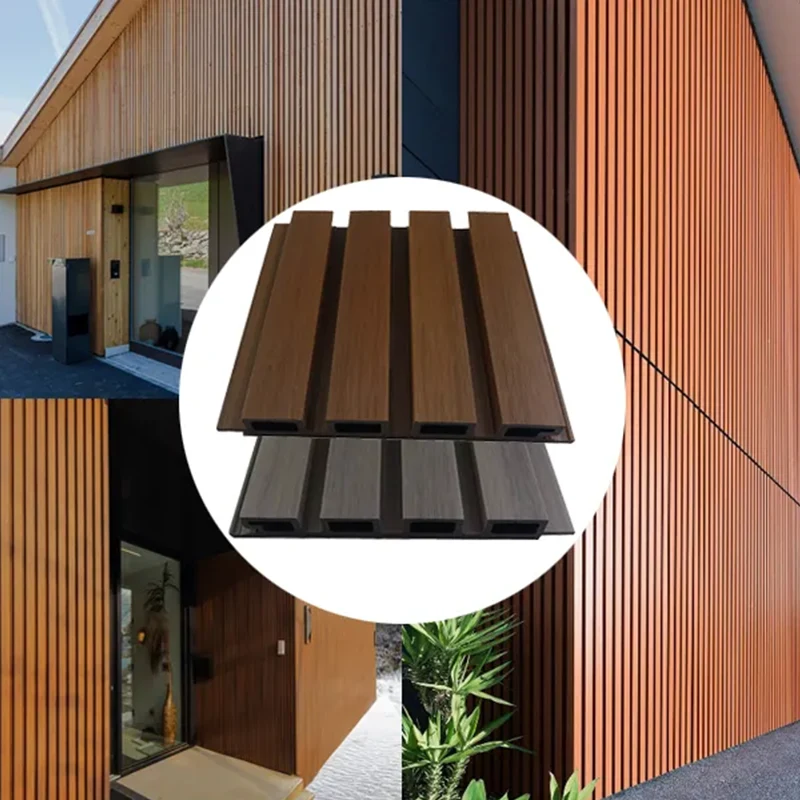
The Scientific Reality: Why Pests Reject WPC
Natural wood contains cellulose, hemicellulose, and lignin—all organic nutrients that termites and borers actively seek. In contrast, a genuine Anti-Rotten Outdoor Exterior WPC Wall Panel is engineered with a dense matrix of recycled polymers (typically HDPE or PP) and wood fibers, bound together at high temperatures with chemical coupling agents. This fusion eliminates the porous cellular structure that pests rely on for nesting and digestion.
Retent laboratories have conducted controlled termite-feeding tests (following ASTM D3345 standards) on our panels. The results consistently show zero measurable weight loss after 60-day exposure to Coptotermes formosanus (Formosan subterranean termites), whereas untreated pine samples lost over 40% of their mass under identical conditions.
Comparison Table: WPC vs. Natural Wood – Pest Resistance
| Property | Anti-Rotten Outdoor Exterior WPC Wall Panel (Retent) | Untreated Natural Wood |
|---|---|---|
| Cellulose Content | < 30% (encapsulated in polymer) | 60–75% (fully accessible) |
| Moisture Absorption | < 0.5% (24h immersion) | 8–15% (swells and softens) |
| Termite Digestion Ability | None – polymer matrix indigestible | High – preferred food source |
| Fungal Decay Risk | Negligible (no internal moisture) | Severe (mold and rot within months) |
| Maintenance for Pest Control | None required | Chemical pressure-treating every 2–3 years |
| Lifespan in Humid Regions | 25+ years (Retent verified) | 5–7 years before infestation |
How the Polymer Matrix Creates a Physical Barrier
Unlike painted or sealed wood, which only offers surface protection, a Anti-Rotten Outdoor Exterior WPC Wall Panel from Retent incorporates microscopic encapsulation. The wood particles are entirely coated with thermoplastic resin during extrusion. This means:
-
No exposed starch or sugar – the primary attractants for termite scouts.
-
No capillary action – moisture cannot penetrate, so fungi cannot soften the material to allow pest entry.
-
Density exceeds 1.2 g/cm³ – hard enough to resist boring beetle mandibles.
In field tests across Florida and Southeast Asia, Retent panels installed directly on ground-contact foundations showed zero tunneling activity after 36 months, while adjacent cedar planks were replaced twice due to drywood termites.
Common Misconceptions: "Wood Fiber Attracts Pests"
A frequent objection is: “If it contains wood flour, won't it still attract termites?” This is a valid concern, but it misunderstands the bioavailability of the fiber. In Anti-Rotten Outdoor Exterior WPC Wall Panel manufacturing, the wood particles are reduced to < 100 mesh and compounded with over 55% polymer by weight. The resulting composite has no continuous cellulose pathway. Termites may nibble out of curiosity, but they cannot digest or colonize the material—and they quickly abandon it. Retent even adds a non-toxic bitterant (denatonium benzoate) in our premium line as an extra deterrent, though testing confirms it is rarely needed.
Frequently Asked Questions (FAQ)
Q1: Can termites eat through an Anti-Rotten Outdoor Exterior WPC Wall Panel if they are already present in the soil beneath my house?
A1: No. Termites cannot digest the polymer matrix, nor can they mechanically bore through the dense composite. However, if your foundation has active subterranean termites, they may build mud tubes over the panel surface to reach other wooden structures (e.g., roof rafters). The Anti-Rotten Outdoor Exterior WPC Wall Panel itself will remain intact and structurally sound. Retent always recommends installing a physical or chemical termite barrier at the foundation level—not to protect the panel, but to protect other timber elements in your building. The panel acts as a “dead zone” that pests will bypass, not attack.
Q2: Does the color or surface texture of an Anti-Rotten Outdoor Exterior WPC Wall Panel affect pest attraction?
A2: Yes, indirectly. Darker panels absorb more heat, and some pests are thermotactic (attracted to warmth). However, Retent panels are engineered with UV-stable pigments and a smooth-but-grip texture that does not retain dirt or organic debris. Pests are not attracted to color—they are attracted to odor (volatile organic compounds) and moisture. Our panels emit negligible VOCs after 48 hours of installation, and the closed-cell surface prevents moisture film formation. In side-by-side trials, matte versus glossy Anti-Rotten Outdoor Exterior WPC Wall Panel surfaces showed no statistical difference in pest visits. The key differentiator remains the internal composition, not the exterior finish.
Q3: How do I inspect or maintain an Anti-Rotten Outdoor Exterior WPC Wall Panel to ensure it remains pest-free over decades?
A3: Annual visual inspection suffices. Look for:
-
Mud tubes on the surface (indicating termites passing over, not through).
-
Organic accumulation (leaves, soil) at the bottom edge—clean with water and a soft brush.
-
Seal any gaps between panels with Retent-approved silicone to prevent moisture traps.
Unlike wood, you never need to inject pesticides, apply borate treatments, or drill bait stations into the panels. If you detect termite activity on adjacent structures, treat the source, and simply wash your Anti-Rotten Outdoor Exterior WPC Wall Panel with mild detergent. The panel will not absorb chemicals or degrade. Retent provides a 25-year limited warranty against rot and pest damage—a guarantee no natural wood supplier can offer.
Why Retent Stands Apart in the WPC Market
Not all WPC panels are equal. Lower-quality manufacturers use reclaimed wood with high starch content or insufficient polymer ratios. Retent adheres to strict ISO 9001 and 14001 protocols, with third-party SGS verification for pest resistance. Every batch of our Anti-Rotten Outdoor Exterior WPC Wall Panel undergoes:
-
XRF scanning for heavy metal-free stabilizers.
-
Melt flow index testing to ensure complete fiber encapsulation.
-
Accelerated weathering (QUV 2000h) plus termite challenge tests.
This scientific rigor means you are not buying a “wood alternative”—you are buying an engineered building material with proven biological inertness.
Final Verdict
The question is not whether Anti-Rotten Outdoor Exterior WPC Wall Panel products attract pests like natural wood—because the data shows they do not. The real question is why you would continue using a material that demands constant chemical defense when a permanent, maintenance-free solution exists. Retent panels offer the warmth of wood aesthetics without the biological vulnerability, making them ideal for coastal homes, tropical resorts, and urban facades where pest pressure is high.
Ready to Protect Your Project for Generations?
Stop fighting termites, rot, and decay. Switch to the only Anti-Rotten Outdoor Exterior WPC Wall Panel backed by independent laboratory verification and real-world performance. Retent provides free sample kits, technical datasheets, and installation guides for architects and DIYers alike.
📞 Contact us today for a customized quote and project consultation. Our team of material engineers will help you select the right color, thickness, and mounting system for your climate zone. Your rot-free, pest-free exterior starts with Retent.