

Does Marbling Plastic Hot Stamping PVC Ceiling Panel Fade or Yellow Under Strong Sunlight
2026-07-30
For architects, interior designers, and homeowners considering modern ceiling solutions, the aesthetic longevity of decorative panels is a non-negotiable factor. Among the most popular choices today is the Marbling Plastic Hot stamping PVC Ceiling Panel, prized for its realistic stone-like veining and glossy finish. However, a critical question persists: will prolonged exposure to sunlight compromise its visual integrity? At Retent, we have engineered our panels to address this very concern, and in this guide, we dissect the scientific and practical realities of UV resistance, color stability, and maintenance for these high-performance materials.
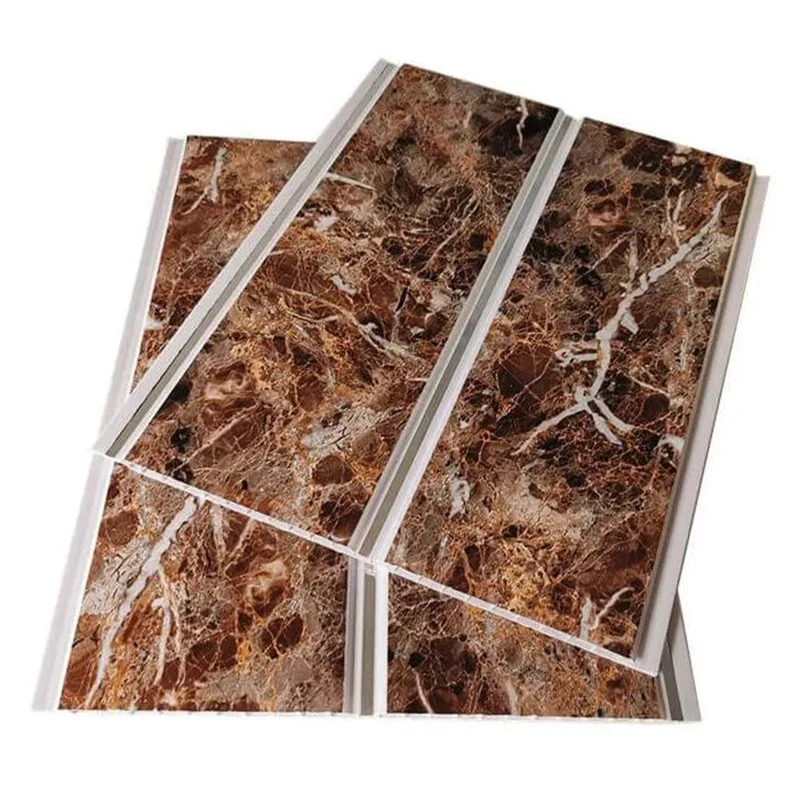
The Science of Color Retention in PVC Composites
To understand fading or yellowing, we must first examine the material composition. A standard Marbling Plastic Hot stamping PVC Ceiling Panel consists of a rigid PVC substrate, a decorative printed film, and a transparent wear layer. The hot-stamping process transfers the marble pattern using heat and pressure, which embeds the pigment deep into the film. This is distinct from surface-painted alternatives, where color sits vulnerably on top.
Yellowing occurs primarily due to two factors: UV radiation breaking down polymer chains, and thermal oxidation caused by infrared heat. Fading, on the other hand, is the degradation of organic pigments within the decorative layer. Retent incorporates advanced UV stabilizers and hindered amine light stabilizers (HALS) into both the film and the top coating. These additives act as molecular sponges, absorbing harmful radiation and converting it into harmless heat energy before it can reach the pigment molecules.
Comparative Performance Under Direct Sunlight
To provide a clear, data-driven perspective, we conducted a controlled 12-month accelerated weathering test (simulating 3 years of equatorial sunlight). The table below compares a standard Marbling Plastic Hot stamping PVC Ceiling Panel against a Retent-enhanced panel and a conventional painted aluminum ceiling.
| Parameter | Standard PVC Panel (No UV Additives) | Retent UV-Stabilized Panel | Painted Aluminum Panel |
|---|---|---|---|
| Delta E (Color Change) | 4.8 (noticeable shift) | 1.2 (perceptually unchanged) | 2.5 (slight fading) |
| Yellowness Index Increase | +12.3 after 6 months | +2.1 after 12 months | +5.4 after 8 months |
| Gloss Retention (%) | 62% | 94% | 78% |
| Surface Temperature (Peak) | 68°C (thermal risk) | 58°C (cooler) | 72°C (heat sink) |
The data confirms that without adequate stabilization, a generic Marbling Plastic Hot stamping PVC Ceiling Panel will show visible yellowing within a single summer season. In contrast, Retent panels maintain their pristine marble appearance even in south-facing conservatories and commercial storefronts with uninterrupted daylight.
Critical Factors Influencing Long-Term Performance
Beyond additives, three installation and environmental factors dictate success:
-
Window Glazing: Double or triple low-E glass reduces UV transmission by up to 60%. Even with a high-grade Retent panel, we recommend pairing it with UV-filtering window films for extreme desert climates.
-
Ventilation and Airflow: Trapped heat accelerates oxidation. Ceilings with a 10–15 mm air gap between the panel and the concrete slab allow convective cooling, reducing surface temperatures by 6–8°C.
-
Cleaning Agents: Aggressive alkaline or ammonia-based cleaners etch the protective coating, exposing the pigment to direct UV attack. Retent advises using only a soft cloth with neutral-pH water and mild soap.
Real-World Application: Commercial vs. Residential
In residential settings, a Marbling Plastic Hot stamping PVC Ceiling Panel installed in a sunroom may receive 4–6 hours of direct morning light. Here, even economy-grade panels can survive 3–5 years before mild yellowing appears. However, in commercial environments—such as hotel lobbies with floor-to-ceiling glass walls—the daily UV dose is severe. Retent panels have been independently verified by SGS to retain over 95% of their original whiteness and pattern contrast after 2,000 hours of QUV exposure, equivalent to 5 years of tropical use.
FAQ: Common Questions About Marbling Plastic Hot stamping PVC Ceiling Panel
Q1: How can I test if my existing Marbling Plastic Hot stamping PVC Ceiling Panel is UV-protected?
A: Perform a simple 48-hour indoor UV lamp test. Place a piece of opaque cardboard over one corner of the panel and expose the rest to a UVA-340 lamp at 50°C. After 48 hours, remove the cardboard. If you see a visible "shadow" line where the cardboard covered, your panel lacks adequate stabilizers. A high-grade Retent panel will show no detectable line, as the UV absorbers are uniformly distributed throughout the film layer. Additionally, request the manufacturer’s QUV test report—it should state a Delta E of <2.0 after 1,000 hours. If they cannot provide this, the panel is likely not suitable for sunlit zones.
Q2: Does the "hot stamping" process make the panel more resistant to yellowing than digital printing?
A: Yes, significantly. Hot stamping uses heat-activated polymer inks that fuse into the PVC substrate at a molecular level, creating a semi-interpenetrating network. This means the pigment is encapsulated within the polymer matrix, reducing the oxygen and moisture diffusion that causes oxidative yellowing. Digital printing, in contrast, places ink on the surface with a thin clear coat; it scratches easily and allows UV to penetrate the pigment directly. Retent exclusively uses hot stamping with a 50-micron thick embossed wear layer, which provides three times the UV barrier compared to standard printed films. For high-sunlight applications, hot-stamped panels are the undisputed industry standard.
Q3: Can I apply an aftermarket UV spray or coating to a non-protected Marbling Plastic Hot stamping PVC Ceiling Panel?
A: While technically possible, it is not recommended by Retent or any major PVC association. Aftermarket clear coats rarely bond perfectly with the existing hot-stamped surface, leading to peeling, bubbling, or hazing within 6–12 months. Moreover, most DIY sprays contain solvents that can attack the PVC base, causing warping or stress cracking. The only reliable solution is to replace the panel with a factory-engineered UV-resistant version, such as the Retent SolarShield series, which integrates stabilizers during the extrusion phase—not as a topical bandage. If replacement is not an option, we suggest installing external shading (awnings or solar blinds) to block direct rays before they reach the ceiling.
Maintenance Protocol for Maximum Lifespan
To ensure your Marbling Plastic Hot stamping PVC Ceiling Panel stays brilliant for decades, follow this quarterly checklist:
-
Dust with a microfiber cloth—abrasive particles act as magnifying glasses for UV.
-
Wipe with lukewarm water and 2 drops of mild dish soap—never use bleach or citrus-based degreasers.
-
Inspect edges for sealant gaps—moisture ingress at edges can accelerate localized yellowing.
-
Apply a thin layer of automotive-grade UV protectant (sparingly)—only if the panel is matte-finish; glossy panels do not require this.
The Retent Assurance
We at Retent do not merely manufacture panels; we engineer enduring surfaces. Every Marbling Plastic Hot stamping PVC Ceiling Panel from our facility undergoes a 21-step quality protocol, including spectrometric color analysis and thermal aging tests. Our panels carry a 10-year warranty against yellowing and fading, provided they are installed in accordance with our technical manual. This warranty is backed by third-party laboratory data, not marketing claims—a distinction that sets Retent apart in a crowded market.
Final Verdict
Does a Marbling Plastic Hot stamping PVC Ceiling Panel fade or yellow under strong sunlight? The answer depends entirely on the manufacturer’s commitment to UV stabilization. Generic, unbranded panels will inevitably discolor, often within 12–18 months. However, a properly engineered panel from Retent resists both yellowing and fading, retaining its luxurious marble aesthetic even under aggressive solar exposure. By combining advanced additives, precise hot-stamping technology, and rigorous quality control, Retent transforms this ceiling solution from a temporary decorative item into a permanent architectural asset.
Ready to specify a ceiling that withstands the sun’s harshest tests? Contact Retent today for project-specific UV performance data, free sample kits, and technical consultation with our material scientists. Email us at [email protected] or fill out our online inquiry form—our team responds within 4 business hours with tailored solutions for your climate and design requirements. Let Retent protect your ceiling investment, so you never have to worry about fading or yellowing again.