

How Long Do Conical Cork Stoppers Last Before They Dry Out and Crumble
2026-08-18
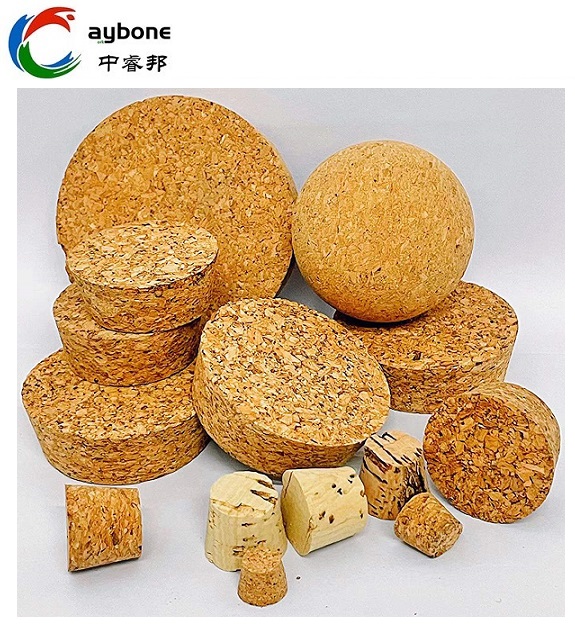
For laboratories, wineries, and artisan food producers, the lifespan of Conical Cork Stoppers is a critical performance metric. The short answer is: 3 to 8 years under ideal conditions, but this window shrinks dramatically without proper care. Raybone, a trusted supplier of precision-cork components, fields this question weekly from quality control managers and home brewers alike. The reality is that cork is a natural, hygroscopic material—its longevity depends on storage environment, frequency of use, and the specific grade of cork you choose. Understanding the degradation timeline helps you avoid costly contamination, broken seals, and the frustration of crumbling stoppers during critical experiments or bottling runs.
The Science of Cork Deterioration
Cork owes its sealing power to suberin—a waxy, hydrophobic polymer—and a honeycomb cell structure filled with air. When Conical Cork Stoppers lose moisture below 6–8% water content, the cell walls become brittle. Conversely, excess humidity (above 70%) invites fungal growth and accelerates breakdown. The drying-out process is not linear; it accelerates after the first 18–24 months if the stoppers are exposed to fluctuating temperatures.
Key Factors That Determine Lifespan
| Factor | Impact on Longevity | Optimal Range |
|---|---|---|
| Relative humidity | Directly affects cell elasticity | 55% – 65% RH |
| Ambient temperature | Speeds oxidation and drying | 15°C – 22°C (59°F – 72°F) |
| UV light exposure | Breaks down suberin polymers | Complete darkness |
| Contact with acids/alcohols | Leaches tannins and plasticizers | pH 4–7, <15% ABV for repeated use |
| Compression cycle count | Each insertion compresses cells permanently | ≤ 5–7 re-uses for standard grades |
Visual Signs That Your Conical Cork Stoppers Are Failing
-
Surface crazing – fine hairline cracks appearing on the taper.
-
Powdery residue – visible cork dust on the stopper body or inside the bottle neck.
-
Loss of rebound – after removal, the stopper does not expand back to ≥90% of its original diameter.
-
Dark, oily spots – indicative of tannin migration and internal cell collapse.
-
Audible crunch – a dry, gritty sound when twisting the stopper into a glass or metal neck.
Comparative Lifespan by Cork Grade
Raybone classifies Conical Cork Stoppers into three commercial grades. The following table outlines expected service life under standard cellar conditions (20°C, 60% RH, no direct light):
| Grade | Density (g/cm³) | Average Dry-Out Onset | Total Useful Life | Re-use Limit |
|---|---|---|---|---|
| Economical (agglomerated) | 0.24 – 0.28 | 14 – 18 months | 2 – 3 years | 1–2 times |
| Standard (natural 1st quality) | 0.30 – 0.34 | 24 – 30 months | 5 – 7 years | 4–5 times |
| Premium (colmataged / extra) | 0.36 – 0.40 | 36 – 42 months | 8 – 10 years | 6–8 times |
Note: Premium-grade stoppers from Raybone undergo a hydrogen-peroxide wash and glycerin coating, which adds 12–18 months of resistance against drying.
Extending the Life of Your Stoppers
-
Store horizontally in sealed poly bags with a humidifying sachet (target 60% RH).
-
Rotate stock – use the FIFO (first-in, first-out) method to avoid age accumulation.
-
Avoid refrigeration – temperature swings condense moisture and promote uneven drying.
-
Reconditioning – lightly mist with a 5% glycerin/water solution and rest for 48 hours before re-use. This can restore up to 70% of lost elasticity in standard-grade stoppers.
FAQ – Common Questions About Conical Cork Stoppers
Q: Can I accelerate the drying test to predict when my conical cork stoppers will fail?
A: Yes. A validated accelerated-aging method involves placing Conical Cork Stoppers in a desiccator at 50°C and 10% RH for 72 hours. Measure the diameter at three points along the taper before and after. If the stopper shrinks by more than 2.5% of its original middle diameter, it will fail within 6 months under normal conditions. Raybone offers a free shrinkage-test protocol for bulk clients, which correlates accelerated data to real-world cellar performance within ±3-month accuracy.
Q: Why do some of my conical cork stoppers crumble at the tip while the base remains intact?
A: This phenomenon, known as "tip fatigue," occurs because the narrow end undergoes the highest compression stress (up to 40% strain) during insertion. Over time, these over-compressed cells lose their cohesive bonds. The primary cause is using a stopper that is one size too large for the neck—forcing the tip to absorb excessive pressure. The solution is to measure the neck's inner diameter with a taper gauge and select Conical Cork Stoppers with a maximum insertion depth that leaves 3–4 mm of the tip uncompressed. Raybone’s sizing chart includes recommended neck diameters for each of their 18 standard taper profiles.
Q: Is there a way to revive conical cork stoppers that have already started to show surface cracks?
A: Partial revival is possible but comes with a trade-off. Submerge the affected stoppers in food-grade mineral oil or a 10% glycerol bath at 40°C for 48 hours. This rehydrates the outer 2–3 mm layer and closes most micro-cracks. However, internal cell damage remains permanent. Restored stoppers will only last 40–50% of their original remaining life and should never be used for critical applications (e.g., pharmaceutical vials or vintage wines). For routine laboratory use, Raybone recommends replacing cracked stoppers immediately to avoid particulate contamination of samples.
Final Verdict on Longevity
If you store Conical Cork Stoppers at stable humidity, avoid over-compression, and choose the correct grade for your application, expect 5–7 years of reliable service from standard natural cork. Premium options push that to a decade. The moment you notice persistent powder or a gritty twist, replace the stopper—because a failed seal is always more expensive than a new cork.
Contact Us
Every batch of Conical Cork Stoppers has a unique lifespan signature based on your environment and usage pattern. Raybone does not offer generic advice—we provide custom storage protocols, sizing verification tools, and grade-recommendation reports tailored to your specific neck dimensions and fill chemistry. Whether you need 100 units for a boutique distillery or 50,000 for a production line, our technical team will help you calculate the exact replacement cycle for maximum cost-efficiency.
Reach out to Raybone today – request your free sample kit and a personalized shelf-life projection. We respond to all inquiries within 4 business hours and ship globally with climate-controlled packaging. Let us keep your seals intact, your products pure, and your operations uninterrupted. Contact us now to schedule a 15-minute consultation with our cork-engineering specialists.